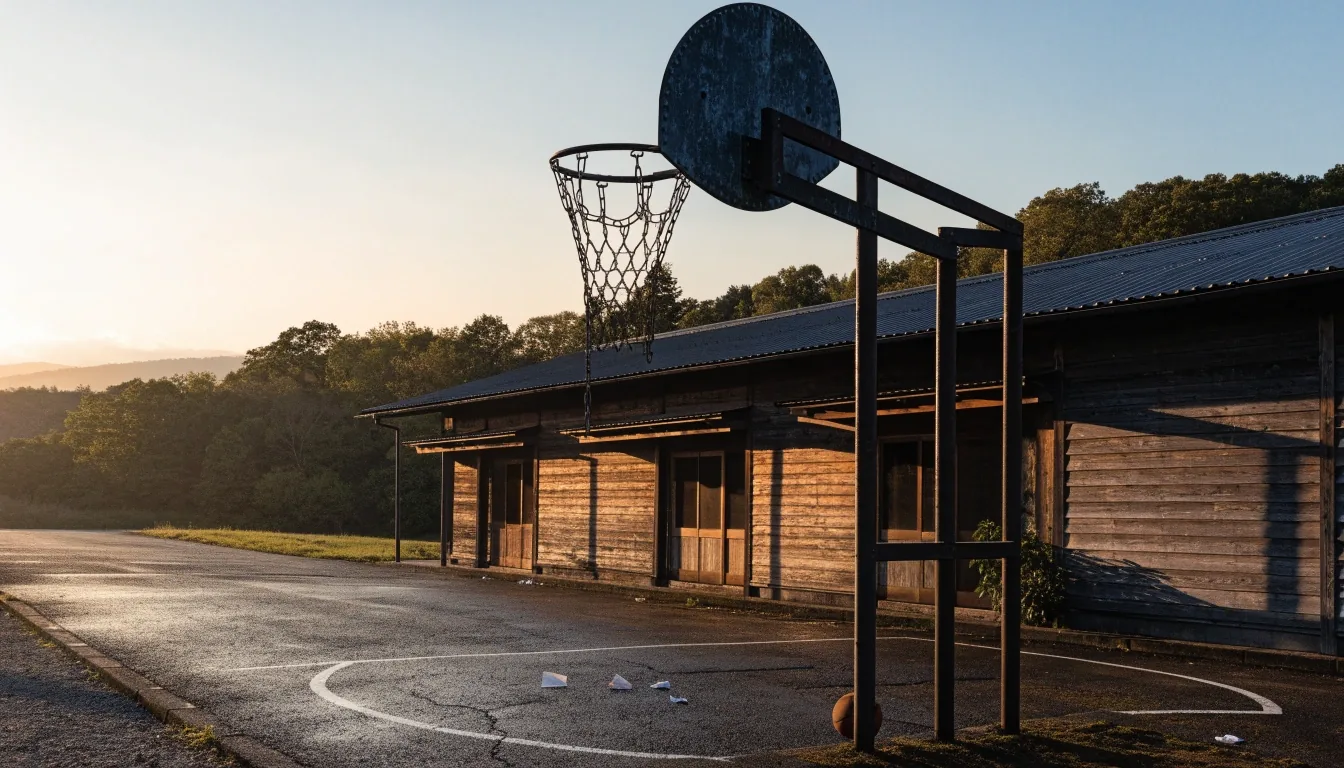
Grassroots sports history
How Grassroots Basketball Took Shape
Regional leagues look permanent from the inside. Most of them aren't. This page traces how amateur and community basketball developed in Japan and Britain, and how those early decisions still shape the fixture lists people read today.
Why history explains structure
If you want to know why Japanese basketball is organized around schools and English basketball around clubs and county associations, the answer is historical rather than sporting. Both systems grew out of institutions that already existed: schools in one case, local clubs and associations in the other. Reading the history removes the sense that either arrangement is inevitable.
It also explains small, practical things a fixture list hides. Why one region plays a full round-robin and another splits into pools. Why some competitions pause for exams and others for harvest work or factory shifts. The shape of a season is usually a leftover from the institution that first ran it, and understanding that makes local sports history easier to follow than any rulebook.
The school roots of Japanese basketball
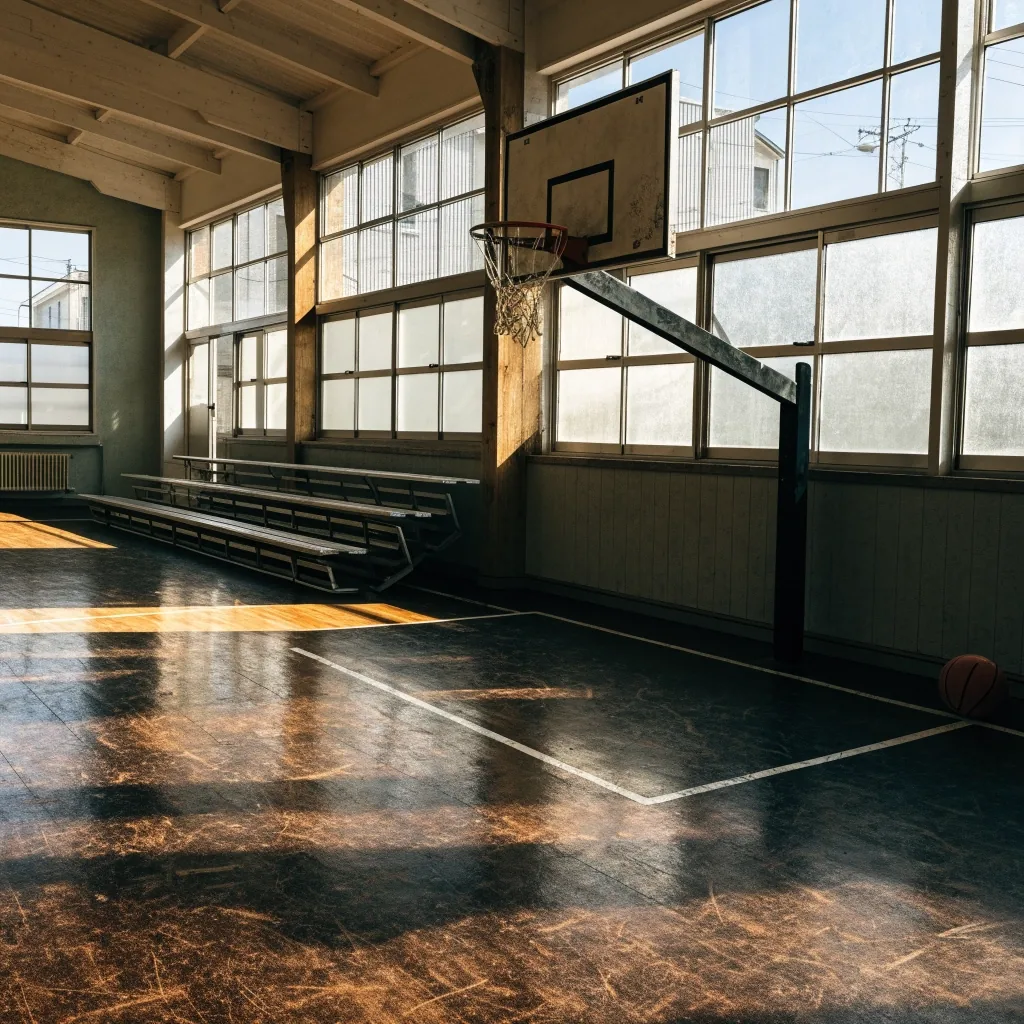
Basketball arrived in Japan through the education system, and it stayed there. That's why school clubs at elementary level remain a genuine entry point rather than a side activity, and why a 2025 study can describe them as part of the standard development path. The school's role wasn't added later. It was the original structure.
The consequences show up in how players age through the sport. A child who starts with a school club trains inside an institution that already owns the building, the timetable and the coach's salary. School basketball training runs on term dates, so a season bends around the academic calendar rather than around a league office. Clubs attached to a school also inherit a built-in audience: classmates, teachers, parents.
That strength is also a limit. A player who leaves school for a job outside the system can find the next step less obvious than it would be in a country where clubs recruit adults. Which is exactly the gap that later amateur and community competitions grew into.
Building the British layer cake
English amateur basketball accumulated its layers in stages: local leagues first, then county-level administration, then a national competition above them. The National Basketball League, structured into regional divisions, sits near the top of that amateur stack today. Below it, city leagues and county associations carry on the older pattern of locally run competition. The layers reflect when each was built, not a single design.
-
Local leagues first
Fixtures between nearby clubs, arranged by the people playing them. No national body, no promotion pathway — just a season that had to be completed.
-
County administration
Registration, discipline and referees needed a body bigger than one league but smaller than the country. County associations filled that space and kept it.
-
National competition above
A regional-division structure that gives the strongest amateur clubs somewhere to go, without replacing the leagues that feed it.
Read bottom to top and the arrangement looks like a cake with three bakes. Nobody drew it in one sitting. Each layer was added when the one below stopped being enough, which is why British regional basketball can feel inconsistent from one county to the next — and why that inconsistency is usually a record of local history rather than a failure of planning.
County associations and their long memory
Warwickshire Basketball Association, listed in Basketball England's local leagues and associations directory, belongs to a tradition of county-level administration with decades behind it.
These bodies were created to solve practical problems: fixtures, discipline, registration. Their persistence is the reason some English competitions have records that go back further than any national database. A county association keeps minutes, results and disputes in the same place for years, and a researcher tracing a competition's early seasons often finds the trail in that paperwork long before it appears anywhere online.
The practical effect for anyone reading grassroots sports reviews is a warning about sources. A national table may only start when the national body started keeping it. Older seasons exist, but they live locally: in club archives, association files, sometimes in a single volunteer who has run the competition for two decades and remembers who won.
That is also why county-level organisers can still decide small things that ripple through a season — a venue change, a rule clarification on eligibility, the date a transfer window closes. The authority is old, and it is local.

How city leagues developed
Urban leagues grew wherever there were enough clubs and enough halls to run a season. The London Amateur Basketball League and the Manchester Area Basketball League belong to that tradition, each shaped by the city it serves. There was rarely a plan to coordinate them. They emerged because players needed games, and the leagues that lasted were the ones that sorted out venues and scheduling.
What a city league has to solve
- Hall availability on weekday evenings, booked months ahead.
- Enough registered players per team to survive a long season.
- Officials willing to travel across the city for a late tip-off.
What survives
- A schedule that teams can actually keep across a winter.
- A volunteer who keeps results in order, season after season.
- Rivalries steady enough that next season arranges itself.
Compare that with Japan, where community sports fixtures often attach to a school, a workplace or a local association instead of a free-standing city league. The unit of organization differs, and so does the paperwork. Both approaches produce a weekly schedule; they just start from different buildings.
Newer competitions in an old system
The system still admits new entrants. We Got Next Basketball League appears among the local leagues listed by Basketball England, which shows that the lower tiers aren't closed. New competitions start small, often with one division, and grow if the administration holds. That pattern has repeated for decades, and it's the main way grassroots sport renews itself.
Watching a new league in its first two seasons is more useful than reading a rulebook. You can see whether the organiser finds halls on a regular night, whether teams return after a heavy loss, and whether anyone is willing to referee. Those three answers usually predict the rest.
Signs a young league is holding together
A repeat venue
Same hall, same night each week. Nothing else stabilizes a division faster.
Returning teams
Clubs that finish the season and reappear for the next one, regardless of the table.
A working record
Results published close to match night, not collected in someone's memory at the end.
Officials who stay
Referees returning for a second season, which is usually a sign the league treats them well.
The professional tier as a late arrival
Japan's B.League and its three divisions, with the B1 League at the top and reported at 24 teams in 2024, are recent compared with the school and club base beneath them. The professional structure was built on top of an amateur world that already existed. That order matters: it explains why Japan's development pathway still runs through schools rather than through academy systems.
Where the levels came from
School and club base
The original structure, run through education and local clubs long before any national league existed.
Amateur competitions
City leagues and county bodies that gave adult players somewhere to keep playing after school.
Professional tier
A later addition stacked above the amateur world, with the B.League divisions at the top of it.
In Britain the order was different. Clubs and association competitions for adults existed before a fully professional national league took shape, so the amateur pyramid had room to develop its own rules and rivalries. Neither country built from the top down, and neither arrangement was chosen in advance.
What the history suggests
First
Grassroots structures outlast almost everything built above them. Leagues that began as a handful of clubs still run seasons when the competitions above them have been renamed, merged or restarted.
Second
The country that puts schools at the centre and the one that puts clubs there end up with very different player routes, even when the sport is identical. Neither outcome was chosen in advance. Both can be read in a current fixture list.
That is the practical use of local sports history for a reader today. When a regional table looks odd — a division with six teams, a cup that pauses mid-season, a competition that only covers one prefecture — the reason is usually older than the competition itself. Follow the institution that first ran it and the shape stops being strange.
Following the story further
History answers why a structure looks the way it does. The current season answers what it does next. These pages carry the parts a history piece can only point at.
Questions readers send about league history
A few recurring questions, answered from the same material this page draws on.
Why do some counties have much older records than others?
Because county associations kept their own files long before any national body compiled a central list. Where a county association stayed active and someone kept the paperwork, older seasons survive. Where it folded or moved, the trail usually stops.
Does Japan have anything like a county association?
The function exists, but the body is different: school federations, workplace teams and local sports associations take on the jobs a county body would handle in Britain. Same need, different institution.
When is a new league worth covering?
Usually after a full season has been completed and a second one has started. One season proves a schedule can be run. A second proves the people running it intend to continue, which is the point at which a grassroots sports review becomes useful to a reader.
How do I check a league claim I read somewhere else?
Start with the body that lists the league, then look for the season's own results. If a figure cannot be traced to a competition record or an association file, treat it as a claim rather than a fact. Our editorial standards page explains how this site applies that test.
Read the record, then the season
If this history raised a question about a league you follow, or about how we check the dates and associations behind it, the editorial desk is open Monday to Friday, 9:00 AM to 6:00 PM JST. Readers writing from outside Japan are answered in order of arrival.
Hoops Chubu Chubu · 3-18-1 Sakae, Naka-ku, Nagoya 460-0008, Japan · [email protected]